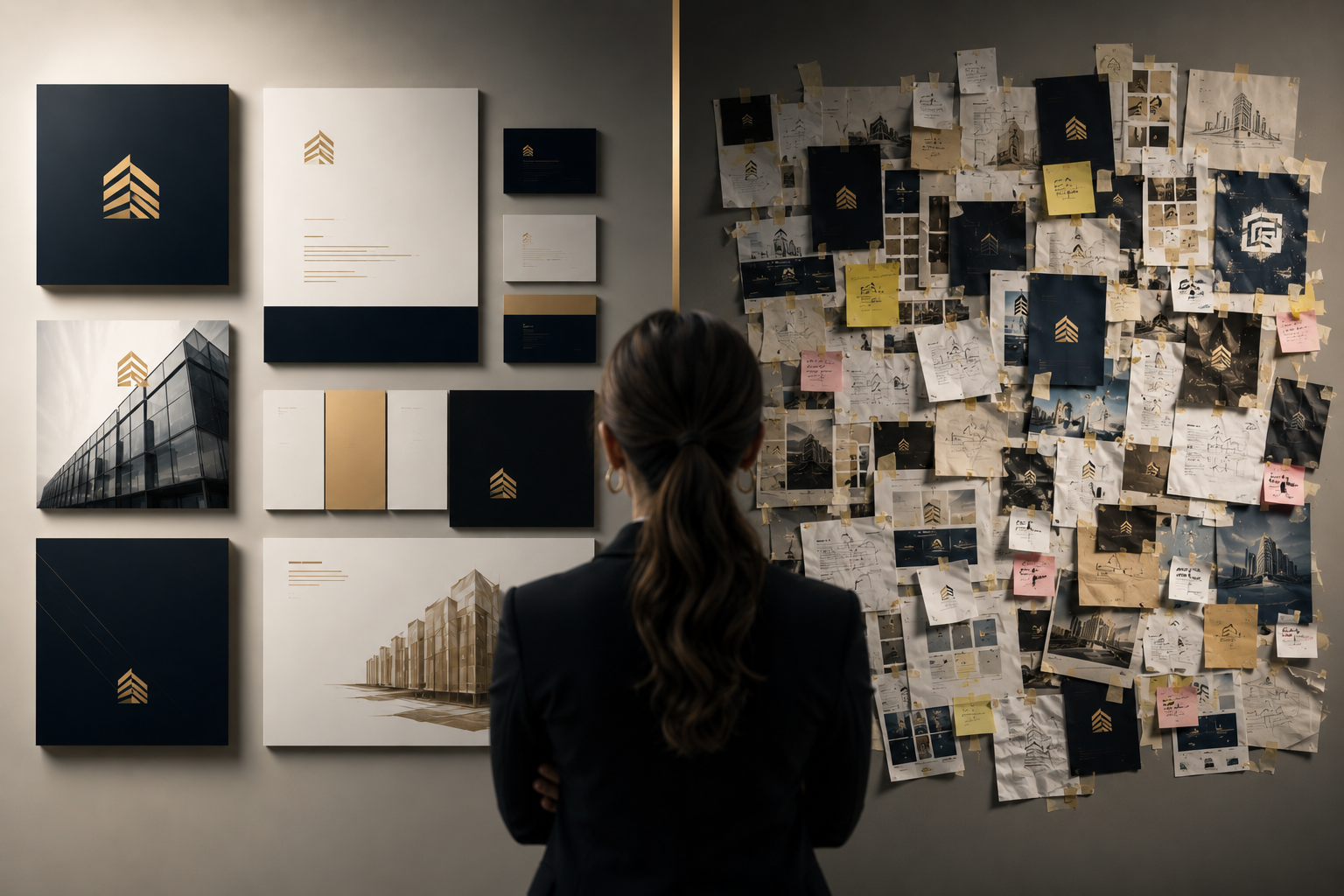
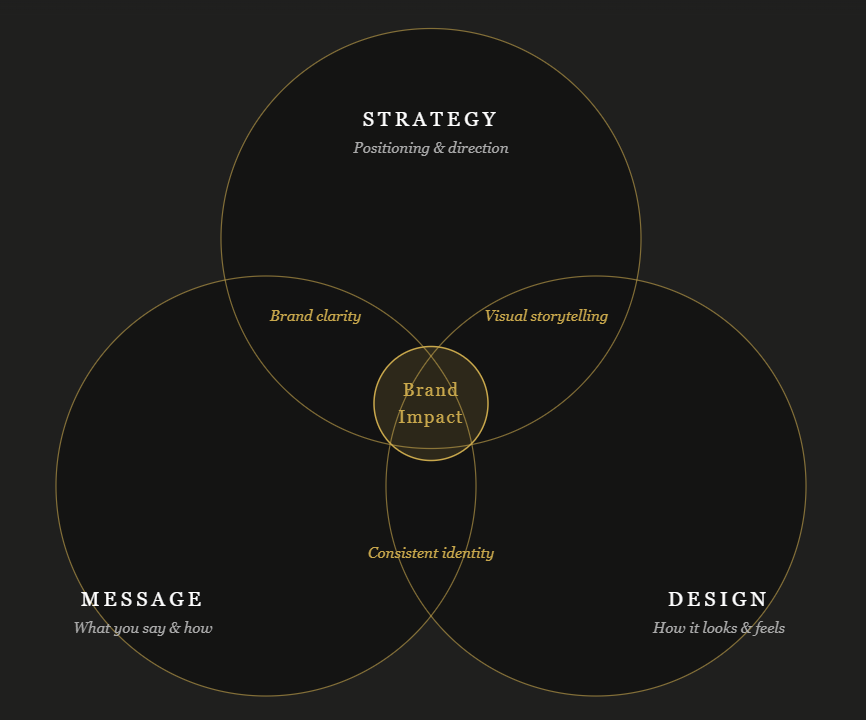
Branding and Design Shape How People Experience Your Business Juvy Ann Canto May 8, 2026 Blog Branding, Digital Marketing, Visual Identity 0 Comments Before a customer reads a single word about your business, they’ve already formed an impression.It happens quickly, almost instinctively.The layout of your website. The colors you use. The spacing, the typography, the consistency of your visuals.All of these elements communicate something — even if you never say a word.This is the power of branding and design.It works quietly in the background, shaping how your business is perceived long before any real interaction begins.And in many cases, that first impression determines everything that follows. Design is always communicating — even when you are not trying to Every visual element in your brand carries meaning.The structure of your pages, the alignment of your content, the style of your imagery, and even the spacing between sections all influence perception.A clean and structured design often feels reliable and professional.A cluttered or inconsistent one can feel uncertain or unorganized — even if the business behind it is strong.The important thing to understand is this: Design is never neutral.It is always communicating something about your business.Whether intentional or not, it is shaping how people interpret your credibility. How design quietly shapes perception When branding and design are done well, they do not need to explain themselves.They guide perception naturally.Strong visual identity can:Create an immediate sense of professionalismBuild trust before any conversation beginsReinforce your message across different platformsMake your business easier to recognize and rememberThese effects are subtle, but powerful.They influence whether someone stays, explores further, or leaves within seconds.Most decisions are not made after reading — they are made after feeling.And design is often what creates that feeling. Trust is built visually before it is built verbally Trust is not only created through communication.It is created through presentation.When your branding is consistent and thoughtfully designed, it signals stability and credibility.Everything feels intentional, which reduces friction in the decision-making process.On the other hand, inconsistent visuals can create doubt — even if the product or service is strong.Because in the absence of clarity, people assume risk.And in business, perceived risk often leads to hesitation. Standing out is not always about saying more — it is about looking different In crowded markets, many businesses say similar things.What often separates them is not messaging alone — it is identity.A strong visual system makes your brand recognizable without explanation.Over time, people begin to associate your visuals, colors, and design language with your business.That recognition builds familiarity.And familiarity builds trust.This is how brands move from being noticed… to being remembered. Design is not decoration — it is communication One of the most common misconceptions is that design is purely aesthetic.In reality, design is strategic communication.It shapes how your message is received before it is even read.It supports your positioning.It reinforces your tone.It frames your value.When done properly, design does not replace strategy — it amplifies it.When done poorly, it weakens even the strongest message. A simple reality check for your brand If you take a step back and look at your business objectively, one question becomes important:Is your brand visually communicating the level of value you actually deliver?If there is a gap between perception and reality, your audience may not fully understand your positioning.And that gap can quietly affect trust, engagement, and conversion.Because in most cases, people do not question your capability — they question clarity. Branding and design are part of the experience, not just the appearance Branding is not something you add at the end.It is something your audience experiences from the first moment they interact with your business.Every visual detail contributes to that experience.When it is aligned, it creates clarity and confidence.When it is inconsistent, it creates uncertainty.And in competitive environments, clarity is often the deciding factor. Turn your brand experience into a strategic advantage Branding and design are not just about making a business look better — they shape how your business is experienced, understood, and remembered.Every visual choice communicates something.Whether intentional or not, it influences perception, builds assumptions, and affects decision-making long before a conversation happens.When your branding is consistent and structured, it creates clarity.It makes your business easier to trust, easier to remember, and easier to choose.When it is not, it can create confusion — even when everything else is strong. Let’s align how your brand is seen with what it actually delivers If your visuals are not clearly reflecting your positioning, your audience may not be experiencing the full value of your business.The goal is not just better design.The goal is clearer communication through design.👉 Let’s turn your brand experience into something that builds trust instantly. Tags: Branding Digital Marketing Visual Identity Related Posts Juvy Ann Canto July 24, 2026 Italy vs. Dubai: Two Ways of Doing Business (And What Each Gets Perfectly Right) W e live this every single day. Our team is Italian. Our office is in Dubai. And between those .. Juvy Ann Canto June 4, 2026 Effective Time Management in Business T ime is one of the most valuable resources in business. Not because it is limited — but beca ..